
- Introduction: The Evolution of the Modern Curator
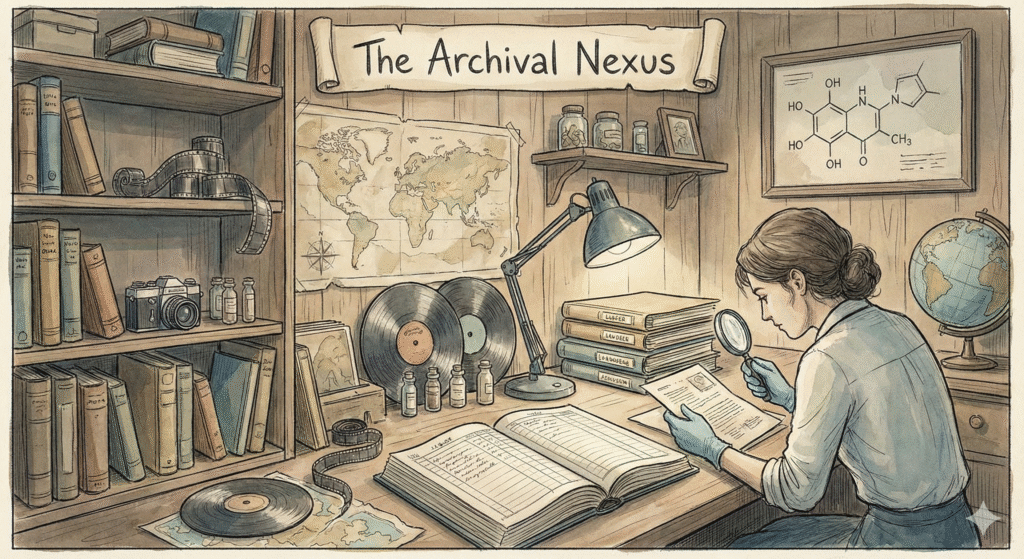
The landscape of contemporary collecting has shifted from the passive accumulation of mass-market goods to a sophisticated, identity-driven practice defined by curation.
This demographic—often affluent adults between 25 and 45—does not merely purchase items; they construct an “Analog Library” and a “Collector’s Shelf” that serve as tangible extensions of their intellectual and aesthetic identity. This persona is characterized by a specific “systems-thinker” mindset, drawn to the complex mechanics of “heavy” board games like Spirit Island, the narrative depth of literary graphic novels like Maus, and the premium tactility of vinyl figures such as Nendoroids.
However, this curated ecosystem faces a critical, often invisible threat: chemical incompatibility. The “Modern Curator” is unknowingly assembling a collection of chemically antagonistic materials. The polyvinyl chloride (PVC) of a Nendoroid, the paper fibers of a graphic novel, and the recycled chipboard of a board game box are dynamic materials that degrade through distinct, often interactive, mechanisms. The “sticky figure” phenomenon, the yellowing of comic pages, and the warping of game boards are not isolated incidents of wear but symptoms of fundamental thermodynamic processes.
This report provides an exhaustive analysis of the material science underlying these collectibles. It argues that to preserve the value—both financial and sentimental—of these collections, the collector must evolve into a “Modern Conservator,” adopting strategies from the museum world to manage the complex interactions within their display shelves.
- The Polymer Paradox: PVC, Plasticizers, and the “Weeping” Figure
The “Collector’s Shelf” is often dominated by vinyl figures, specifically the “chibi” style Nendoroids. While aesthetically pleasing, these items represent a significant preservation challenge due to their reliance on Polyvinyl Chloride (PVC).
The Chemistry of Flexibility
PVC in its native state is a rigid, brittle plastic, chemically similar to white plumbing pipes. To make it suitable for the detailed, soft sculpting required for anime figures—pliable hair, flexible capes, and soft skin textures—manufacturers introduce additives known as plasticizers.
Unlike the plastic itself, these plasticizers are not chemically bound to the material. They function by floating between the plastic molecules, acting like a lubricant that allows the rigid chains to slide past one another. Essentially, the plasticizer is a solvent that is permanently “frozen” within the solid plastic.
The “Sticky” Pathology
The preservation issue arises because this mixture is unstable. Over time, thermodynamic forces drive the plasticizer molecules to migrate from the center of the figure to the surface. In an open environment with airflow, these molecules evaporate unnoticed. This evaporation is responsible for the distinct “new toy smell” of fresh figures.
However, when a figure is hermetically sealed—such as in a blister pack or a tight display case—the air around it becomes saturated. The plasticizer can no longer evaporate. Instead, it accumulates on the surface of the figure, forming a tacky, shiny, and viscous film. This is known as “weeping” or “stickiness.” It acts as a trap for dust and grime, which can become permanently embedded in the figure. Worse, because plasticizers are solvents, they can eventually dissolve the paint on the figure, causing colors to run or smear.
The “Mint-in-Box” Paradox
This science reveals a flaw in the traditional “Mint-in-Box” investment strategy. The original packaging creates a stagnant microclimate with zero air exchange. This effectively forces the plasticizer to remain on the figure’s surface, accelerating degradation. While a sealed item may have high market value due to perceived rarity, physically, it is often in worse condition than an opened, well-maintained figure. The highest grade of preservation for a PVC figure is not “sealed,” but “controlled,” which involves periodically opening the box to let the figure “breathe.”
- Pillar 1: The Analog Library – Preservation of Cellulose
The “Analog Library” consists of high-quality graphic novels and literary comics. Unlike plastic figures, paper degrades through acid hydrolysis and oxidation.
The Acid Trap
Most graphic novels contain wood pulp, which introduces lignin into the paper. Lignin is a complex organic polymer that provides structure to plants but is chemically unstable. Over time, especially when exposed to humidity or UV light, lignin breaks down and releases acids. These acids attack the cellulose chains that hold the paper together, causing the pages to turn yellow and become brittle. This process is autocatalytic, meaning the acid produced by the paper speeds up its own destruction.
The “Acid-Free” Misconception
Many collectors rely on “acid-free” boards and boxes, but this term can be misleading. Most of these products are actually “buffered,” meaning they contain a reserve of chalk (calcium carbonate) to neutralize acids. However, this buffer is a finite resource. In a sealed environment with a degrading book, the buffer eventually gets used up, and the storage box itself can become acidic.
Advanced Enclosures: Mylar vs. Polyethylene
To combat this, collectors should use specific plastics for storage. Polyester (often sold as Mylar) is the gold standard. It is chemically inert, incredibly strong, and blocks pollutants from the air almost entirely. It has a lifespan of over 100 years. Polyethylene, the material used for standard comic bags, is a cheaper alternative. While safe for short-term storage, it is softer, less clear, and lets more air pass through, offering less protection against environmental pollutants than Mylar.
- Pillar 3: The Tabletop Ecosystem – Conservation of Board Games
Complex board games like Spirit Island present unique challenges because they are composite objects containing cardboard, paper, wood, and plastic.
The Box as a Micro-Environment
The game box itself is often the primary threat. Most game boxes are made from recycled chipboard, which is highly acidic. As the box ages, it fills the air inside with organic acids. Furthermore, a dense stack of board games acts as a sponge for humidity. If the room gets too damp, the cardboard absorbs moisture and can grow mold. If it gets too dry, the paper wrap on the box can shrink and peel.
Structural Integrity: Vertical vs. Horizontal
There is a constant debate about how to store games. Stacking them flat (horizontally) often leads to “dishing,” where the weight of the upper boxes crushes the lids of the lower ones, causing them to cave in. Storing them upright like books (vertically) prevents this damage but causes “component drift,” where the pieces inside fall to the bottom, potentially warping the insert.
The best solution for the modern curator is vertical storage combined with specific tools. Silicone X-Bands are recommended over rubber bands. Rubber bands degrade and melt into a sticky mess over time, ruining boxes. Silicone is chemically stable and retains its elasticity. Inside the box, non-adhesive vinyl tape (like Hugo’s Amazing Tape) can secure card decks without leaving the residue associated with masking tape.
- The Interaction Zone: Cross-Contamination in Mixed Media Displays
The most critical insight for the “Modern Curator” is the danger of mixed-media storage. Storing a Dungeons & Dragons campaign book (paper) next to painted miniatures (PVC) creates a “chemical cocktail” that accelerates degradation.
The Mechanisms of Cross-Contamination
When PVC figures and paper artifacts are stored together, two main issues arise. First is Plasticizer Transfer. Plasticizers are oily substances. If a “weeping” figure touches a book cover, the oil wicks into the paper, creating a permanent translucent stain that looks like a grease spot.
Second is the “Photocopy Effect.” PVC has a high affinity for printer toner and ink. If a plastic figure or sleeve is pressed against a printed page, the plasticizer can soften the ink. When you eventually separate them, the ink may lift off the paper and stay stuck to the plastic, ruining the book.
To prevent this, strict material segregation is required. Ideally, books and figures should be on separate shelves. If they must be together, use a barrier layer like a Mylar sleeve on the book to prevent direct contact with the figure.
- Advanced Mitigation Strategies: The Curator’s Toolkit
To manage this complex environment, the collector should adopt tools typically reserved for museum conservation.
Microchamber Technology
One of the most powerful tools is Microchamber Paper. Unlike standard archival paper, this material contains zeolites (microscopic mineral traps) and activated carbon. These ingredients actively trap pollutants like acid and plasticizer fumes, pulling them out of the air before they can damage the collection. Inserting a sheet of Microchamber paper inside the cover of a graphic novel or placing it in a box with action figures provides active protection that standard supplies cannot match.
Humidity Control: Art Sorb
Controlling humidity is vital. The ideal range for a mixed collection is 45-55% relative humidity. Standard silica gel packets are often too aggressive, drying the air out completely, which can crack paper and wood. A better alternative is Art Sorb, a silica product re-engineered for museums. It is designed to maintain a specific humidity level, absorbing moisture when it’s damp and releasing it when it’s dry to keep the environment stable.
Data-Driven Monitoring
Finally, you cannot manage what you do not measure. Modern collectors use smart sensors (like SensorPush or Govee) to monitor their display cases. These devices send real-time data to a smartphone, alerting the collector if the temperature or humidity spikes, allowing for immediate intervention.
- The Packaging Revolution: A Strategic Shift
A major recent trend is the shift by manufacturers, particularly Good Smile Company, from plastic blister packaging to cardboard. This change is driven by sustainability but alters preservation strategies.
Old Packaging (Plastic Blister): This offered great visibility and physical protection but created a sealed, air-tight environment that trapped plasticizer fumes, leading to sticky figures.
New Packaging (Cardboard): The new boxes are opaque, meaning you can’t see the figure without opening it. However, the cardboard is breathable. This allows gas exchange, significantly reducing the risk of the “sticky figure” syndrome.
This shift effectively kills the “sealed” investment strategy. Since you cannot see the figure to verify its condition or check for mold without opening the box, the secondary market will likely demand open-box inspections. The best strategy is now to unbox and display the figure, treating the packaging as a recyclable vessel rather than a holy artifact.
- Preservation Strategy Summary
To summarize the approach for the “Modern Curator,” here is a breakdown of how to handle each material type:
• Graphic Novels & Comics: The primary threat is acid hydrolysis (yellowing). The basic strategy is using a standard bag and board. The advanced “Curator” strategy involves using Mylar (Mylites 2) sleeves combined with Microchamber Paper inserts to actively trap acids.
• Board Games: The primary threats are humidity, mold, and box crushing. The basic strategy is using silica gel packets. The advanced strategy uses Art Sorb for precise humidity control, vertical storage to prevent crushing, and Silicone X-Bands to keep the box closed without damaging it.
• Vinyl Figures: The primary threat is plasticizer migration (stickiness). The basic strategy is keeping them out of sunlight. The advanced strategy requires periodic “breathing” (taking them out of the box) and using Zeolite Scavengers in the display case to absorb fumes.
• Mixed Displays: The primary threat is cross-contamination between materials. The advanced strategy mandates Material Segregation (keeping plastics and paper apart) and using Activated Carbon filtration to clean the air within the cabinet.
- Conclusion: From Hobbyist to Conservator
The “Modern Curator” is not merely a consumer of pop culture; they are the custodian of a chemically active ecosystem. The items on your shelf—Maus, Spirit Island, and Nendoroids—are polymers, fibers, and inks locked in a slow battle with thermodynamics.
By understanding the hidden threats of plasticizer migration and acid hydrolysis, and by equipping yourself with the tools of the trade—Mylar, Microchamber Paper, and Art Sorb—you ensure that your collection survives not just as a financial investment, but as a preserved artifact of your personal identity. In the modern era, the most sophisticated collector is no longer the one with the most sealed boxes, but the one who understands the molecular destiny of their shelf.